Everyday neuroscience — and the future
Ordinary moments, myths, emerging technology, and your bridge challenge.
Feeling nervous before a presentation, remembering an old song, being interrupted by a notification — every ordinary moment can become a neuroscience question. The field also drives emerging technology: brain-computer interfaces, assistive devices, brain imaging, and (loosely) artificial intelligence.
Everyday neuroscience
You feel nervous before a presentation.
How stress and arousal influence attention, heart rate, memory, and emotion.
You remember a song from years ago.
How information is encoded, stored, and retrieved.
You practice a dance move or sport skill.
How repetition supports motor learning and brain–body coordination.
An illusion tricks your eyes.
How the brain interprets visual information rather than simply recording it.
You feel tired after sleeping late.
How sleep supports attention, mood, and learning.
A phone notification interrupts your work.
How attention, habits, expectations, and reward-related processes shape behavior.
Brain Myth or Evidence?
Brain Myth or Evidence?
Select an answer, then examine what neuroscience research suggests.
1.People use only 10% of their brains.
2.Memories can change when we recall them.
3.The brain completely stops developing at age 18.
4.Stress can affect attention and memory.
Choose an answer for each statement to reveal the research.
Try it: low-cost activity
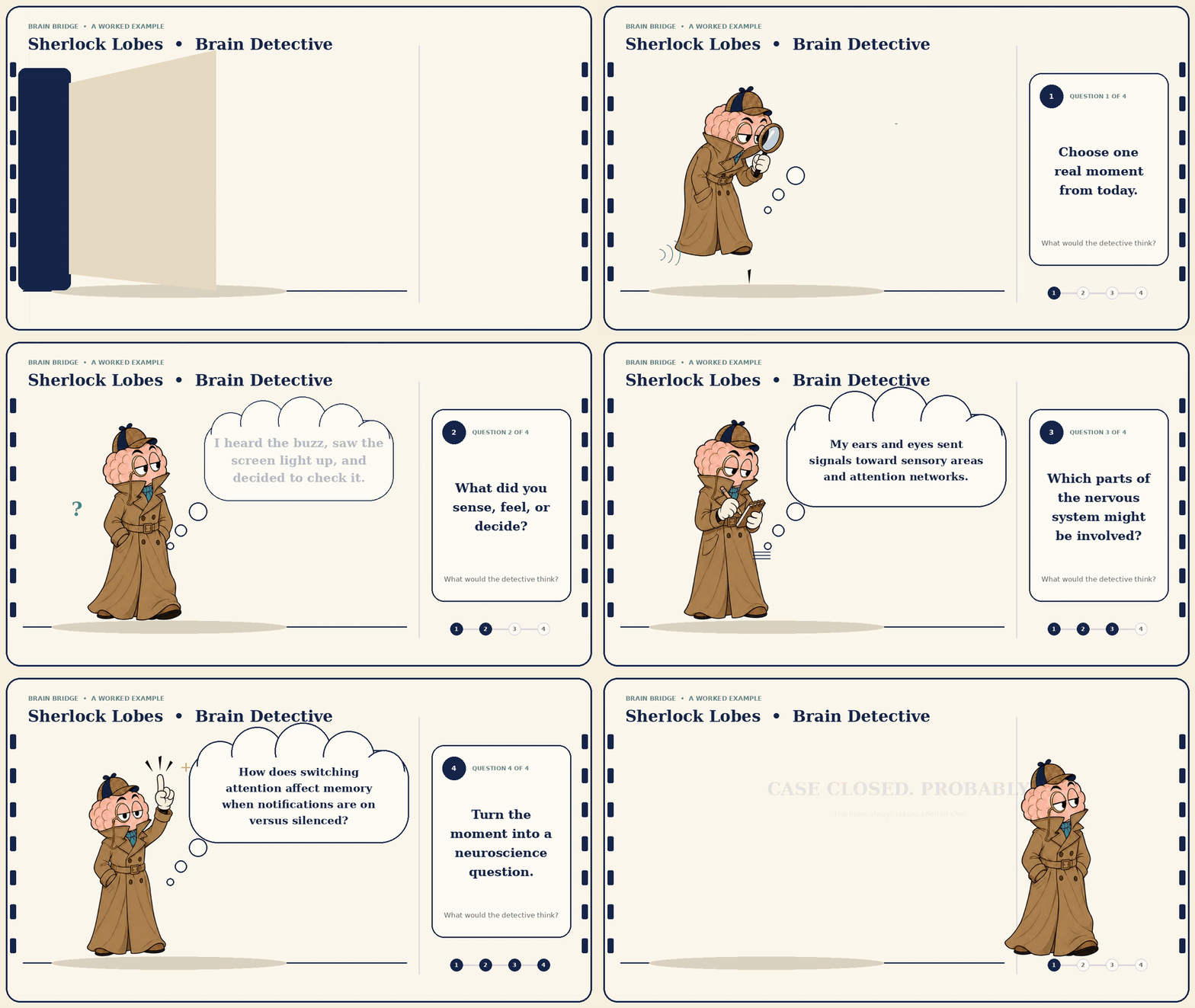
Become a Brain Detective
Choose one real moment from today — learning, emotion, movement, memory, sleep, stress, attention, or sensation. Break it into parts, then turn it into a neuroscience question.
- 1Choose one real moment from today — learning, emotion, movement, memory, sleep, stress, attention, or sensation.
- 2Describe the moment in one or two sentences, then note what you sensed, felt, or decided.
- 3Identify which parts of the nervous system might be involved and where neurons could be receiving or sending information.
- 4Turn the moment into a neuroscience question using: How does [a brain process] affect [a feeling/behavior/skill] when [a condition changes]?
Brain Detective prompts
- 1.Describe the moment in one or two sentences.
- 2.What did you notice, sense, remember, feel, or decide?
- 3.What response happened in your body or behavior?
- 4.Which parts of the nervous system might be involved? Explain your choice.
- 5.Where might neurons be receiving or sending information?
- 6.Turn the moment into one neuroscience question.
Question builder
How does [a brain or nervous-system process] affect [a feeling, behavior, or skill] when [a condition changes]?
Example: How does getting less sleep affect attention during a morning class?
Neuroscience & emerging technology
Brain–computer interfaces
Ways to translate patterns of neural activity into commands for a device.
Assistive and prosthetic technology
Tools that may help people communicate, move, hear, or interact with the world.
Brain imaging and data science
Methods for measuring and analyzing patterns related to brain structure and activity.
Artificial intelligence
Computer systems that learn from data; some ideas were loosely inspired by networks of neurons, but AI systems and biological brains are not the same.
Dr. Robert Alexander, cognitive scientist and director of New York Tech’s Human Factors & Neuroscience Laboratory, demonstrates how to use the EyeLink 1000 Plus and explains how eye-tracking helps researchers study vision, attention, and human behavior.
Three Key Takeaways
- 1Neuroscience is not just for labs — everyday moments like remembering a name or feeling stressed can be turned into real research questions.
- 2Many popular claims about the brain are myths; good neuroscience asks for evidence rather than accepting catchy stories.
- 3Emerging technologies like eye-tracking let researchers measure attention and behavior in real time, opening new ways to study the brain.